PRANAYAMA TEACHER TRAINING COURSE


At Pranayama teacher training we teach about the science of Yogic breathing. Taking a breath is the first and the last action, which all living beings do in their lifetime. Therefore, breathing is the one constant truth we all have. Without breath, there is no life. But we hardly take notice of our breath in our daily life.

Daily stress, tensions and physical habits can create physical and energetic obstacles in our bodies. Without even noticing, our breathing becomes gradually more shallow or stilted. Bit by bit we develop unconscious breathing patterns restricting the flow of breath and Prana. Because of that so many among us suffer from bad breathing patterns and they have no idea that they are suffering from the ailment.


Pranayama – The Traditional Yogic Breathwork

Pranayama is roughly translated as extension of the life force. The word is composed by joining two Sanskrit words: ‘Prana’, which means the life force, and ‘Ayama’, which means to expand Prana by implying a set of breathing techniques. So, the breath is intentionally altered in order to produce specific results.


Benefits of Pranayama

The practice of pranayama helps in clearing the physical and emotional obstacles in our body to free the breath. Because of that with regular and sustained practice of pranayama, one feels the change in thought patterns and a new boost of energy in the body. Furthermore you reach higher levels of consciousness.

  • Helps release physical tension and emotional obstacles that restrict the natural flow of breath.
  • Increases vitality and enhances the flow of life force energy (Prana) throughout the body.
  • Encourages positive thought patterns and improved focus.
  • Induces deep relaxation while maintaining alertness.
  • Helps restore harmony and balance within the energy system.
  • Encourages the body’s natural healing processes.
  • Promotes mindfulness and presence.
  • Helps practitioners access deeper states of awareness and inner stillness.

Apply for the training here >

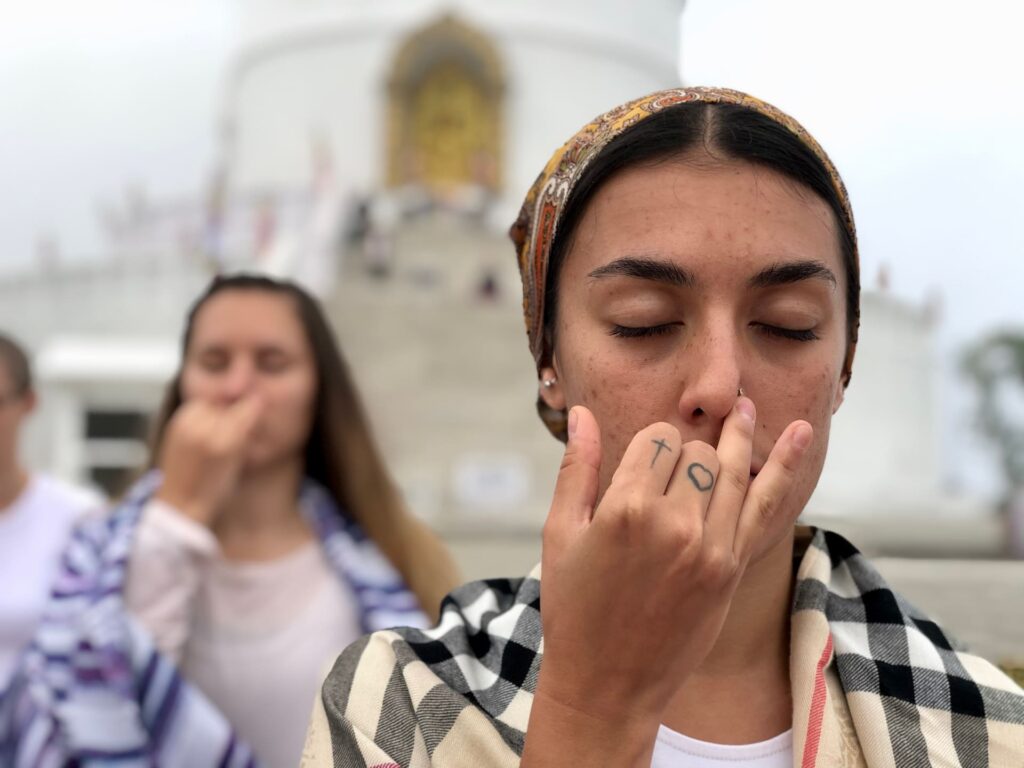
A Woman practicing Nadi Shodhan during her Pranayama teacher training

Our Pranayama Teacher Training is offered in below module:

100 hour Pranayama Course: for those who want to understand all about breathing.

Advanced 200 hour Pranayama Teacher Training: for those who want to deepen their practice and teach it to others.

50 hour Online Yogic Breathwork Instructor Course: to help you stay healthy and boost your immunity. You can do an online course with the comfort of your own home and flexible time. 


As of now, we offer in-person Pranayama training in these retreat centers:

 In Rishikesh, India

In Pokhara, Nepal

What you will learn in Pranayama training?

  • Learn Pranayama in the right manner
  • Principles of breathing practices
  • Preparation for Pranayama practices
  • Science behind Pranayama techniques
  • Pranayama in swara Yoga context
  • Benefits of diaphragmatic breathing
  • Suitable weather and place for intense breathing practices
  • Teaching pranayama to others
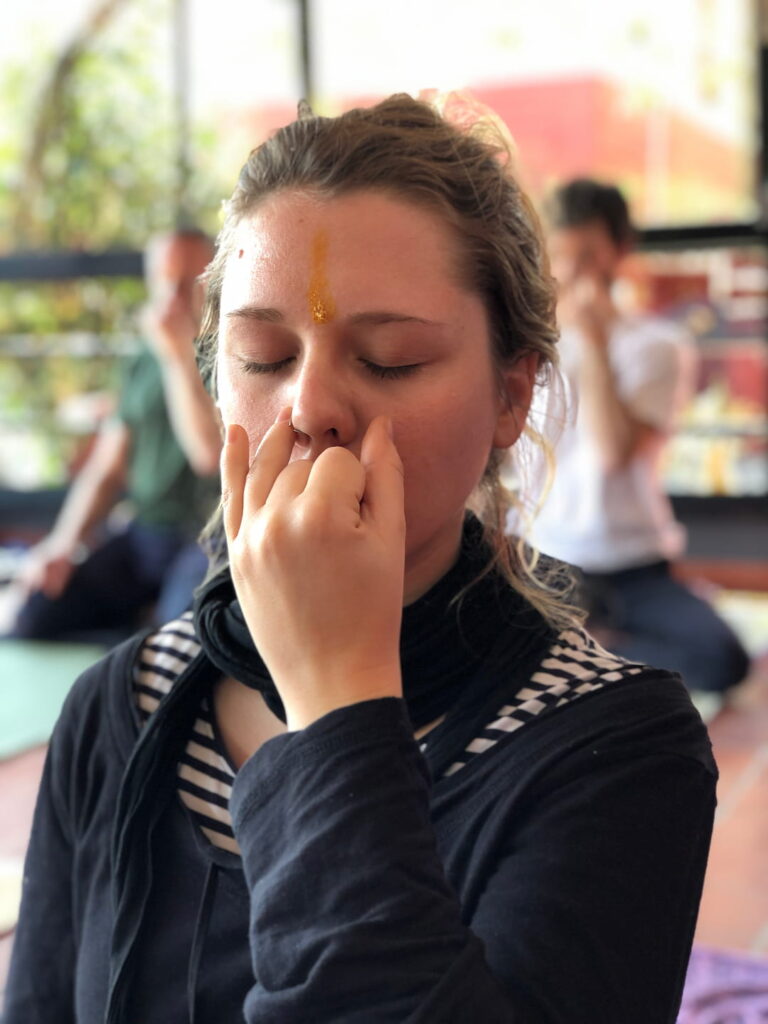
A girl doing breathing practice during Pranayama course in Himalayas

Pranayama Techniques for Beginners 

There are several basic techniques in pranayama that should be applied in the beginning of the practice. Only when a sound and healthy breathing is established can you introduce advanced techniques as well. Depending upon the personal progress of the students we teach Pranayama sequence.

  • Makarasana
  • Diaphragmatic breathing
  • Digestive breathing
  • Breath awareness
  • Abdominal breathing
  • Whole body breaths
  • Nadi Shodhanam
  • Brahamri
  • Bhastrika
  • Kapalabhati 
  • Ujjayi
  • 18 Pranayama Techniques
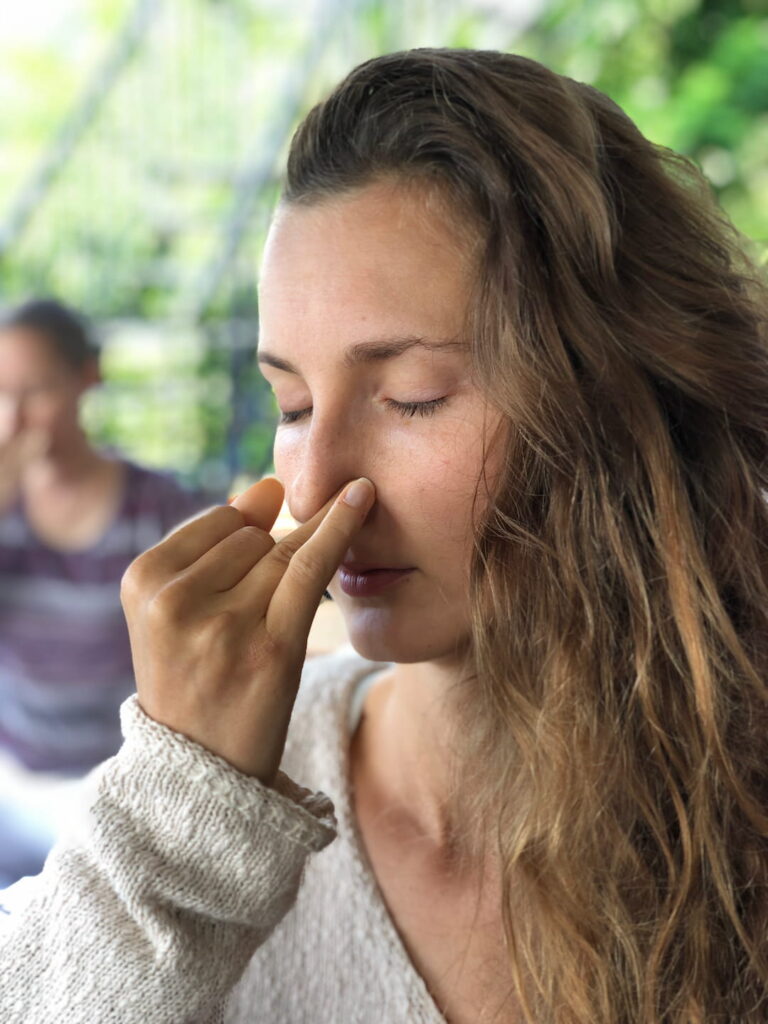
A woman doing moring pranayama class in pranayama teacher certification course

Pranayama Course Curriculum

1. Foundations of Pranayama Philosophy

Build a strong traditional and experiential understanding of pranayama.

  • Principles of Prana
  • Shatkriyas
  • Nadis (Ida, Pingala, Sushmana)
  • Puraka (Inhalation)
  • Rachaka (Exhalation)
  • Kumbhaka (Breath Retention)
  • Five Koshas (Pancha Kosha)
  • 7 Chakras & Kundalini
  • So-ham Mantra with breath
  • Mudras for breath control 
  • Classical text references (Hatha Pradipika, Patanjali Yoga Sutras)
  • Meaning and purpose of pranayama in traditional Ashtanga yoga
  • Bandhas

2. Classical Pranayama Techniques for Personal Practice (Sadhana)

Develop a consistent, disciplined pranayama practice.

  • Nadi Shodhana, Anulom-Vilom Pranayama (alternate nostril breathing)
  • Kapalabhati Pranayama (cleansing breath)
  • Bhastrika Pranayama (bellows breath)
  • Ujjayi Pranayama (victorious breath)
  • Sheetali / Sheetkari (cooling breaths)
  • Bhramari Pranayama (humming bee breath)
  • Surya Bhedana
  • Chandra Bhedana
  • Agni Sara
  • Moorcha Pranayama
  • Plavini Pranayama
  • Breath retention (Kumbhaka): Antar & Bahir
  • Bandhas in pranayama: Mula, Uddiyana, Jalandhara, Mahabandhas
  • Yogic breathing
  • Sequencing pranayama safely in daily practice
  • Building a personal practice routine

3. Anatomy and Physiology of Breath

Understand how pranayama affects the physical and energetic body.

  • Structure and function of the respiratory system
  • Diaphragm training & mechanics
  • Lung capacity
  • Nervous system regulation (sympathetic vs parasympathetic)
  • Breath and brain: stress, focus, and emotional balance
  • Oxygen, carbon dioxide balance and its effects
  • Scientific perspective on breathwork and health

4. Therapeutic Applications of Pranayama

Using breath as a tool for self healing and balance.

  • Pranayama for stress, anxiety, and sleep disorders
  • Breathwork for respiratory health
  • Supporting emotional regulation through breath
  • Personalized Pranayama according for individuals
  • Ayurveda and Pranayama
  • Nutrition for your practice
  • Counterindications

5. Subtle Pranic Bodies & Energy flow

Pranayama beyond techniques.

  • Sushmana Nadi Breathing
  • Chakra Breathing
  • Pranic flow and energy balancing techniques
  • Relationship between pranayama, meditation, and consciousness
  • Energy cleansing breath

6. Teaching Methodology & Class Design

Learn how to confidently guide others.

  • Principles of teaching pranayama safely and effectively
  • Structuring a pranayama class (beginner to advanced levels)
  • Cueing techniques: verbal, visual, and energetic
  • Observing and correcting students
  • Modifications 
  • Integrating pranayama into yoga classes

7. Practicum & Teaching Practice

Apply knowledge in real teaching scenarios.

  • Guided teaching sessions
  • Peer teaching and feedback
  • Self-evaluation and refinement
  • Building confidence as a pranayama teacher

Who can join Pranayama Course?

Yoga asanas are the main focus of Yoga teacher training available in the western world. So Yoga teachers are not ready to incorporate pranayama and Kriyas in their classes. This course aims to help the student who wants to learn pranayama and teach to others. 

This training is suitable for anyone who:

  • Are curious about the relationship between breath, emotions, and wellbeing.
  • Feel drawn to explore yoga beyond movement and physical practice.
  • Wish to establish a more refined and consistent personal pranayama practice.
  • Want to understand traditional breathing techniques within their authentic yogic context.
  • Intend to share pranayama safely as part of their professional work.
  • Value both ancient wisdom and its practical application in modern life.
  • Want to become a breath coach and train others.


Preparation for Pranayama training

In our Pranayama training you´ll learn to clean your Nadi system, the subtle energy channels inside you. Environmental toxins as well as emotional ballast will be removed so that the Prana can flow freely. To intensify your progress and spiritual growth during the course you can avoid toxins in food and drinks in advance. As a preparation we recommend to adapt your food intake and your biorhythm. Only eat vegetarian and clean food, go to bed early and get up early in the morning. You will get into daily practice much easier this way. Here is a list of various Pranayama techniques we teach during the course.


Best to avoid:

  • Soda drinks
  • Fluoridised foods
  • Processed foods
  • Alcohol
  • Smoking
  • Coffee/tea
  • Processed sugar

Also start observing your own breathing patterns and let your breath be

  • Even
  • Silent
  • Uninterrupted
  • Deep


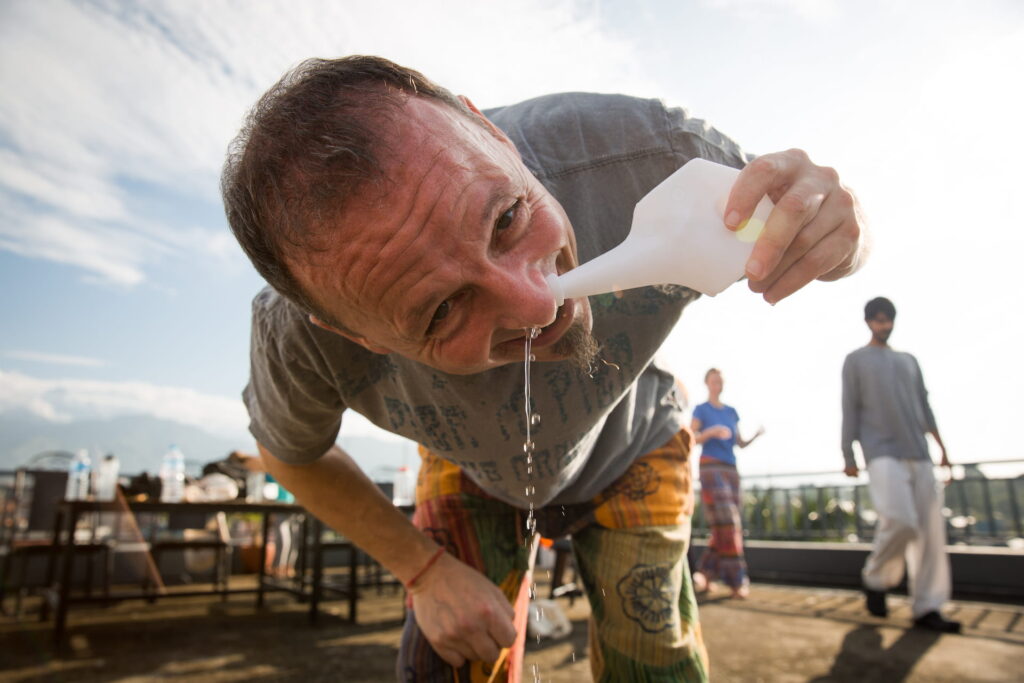
A man doing Morning nose cleansing during Pranayama teacher training

Pranayama Teacher Certification

After completing the course our students receive a Pranayama teaching certification. The awarded Pranayama certificate is from Vedic yoga academy. Upon completing the training you can practice and teach pranayama class or integrate it in your yoga classes. 


Student Experience

For me even being aware of my breath for 10 Minutes is a challenge but I am amazed how well it works. In one week of focusing on my breath a lot, I almost never had my old breathing problem. I’m very proud and more than motivated to keep on practicing every day to establish smooth breathing.  -Sonya


Have a Question? Write Us: